










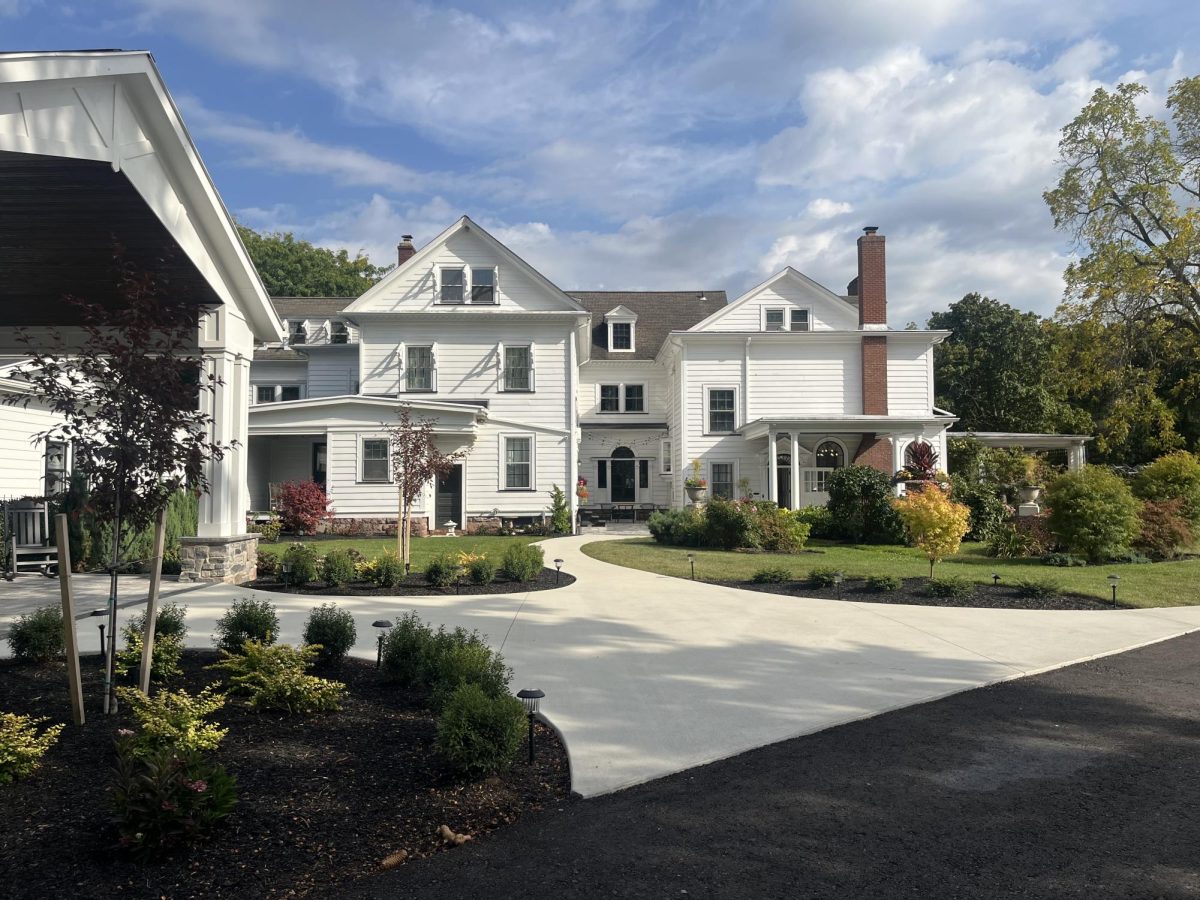
As dusk settled over Brockport on January 14, board members of the historic Morgan-Manning House gathered for their monthly meeting. Moments later, they spotted smoke drifting from behind the home—the start of a blaze that would once again threaten the 170-year-old landmark.
The Morgan-Manning House has seen tragedy before. When fire tore through the building in 1964, taking the life of the last remaining Morgan family member, Brockport residents refused to let the heart of their town’s history be lost. More than half a century later, the recent blaze renewed that same sense of purpose. As restoration plans take shape, the community once again finds itself united around the home that represents Brockport’s history.
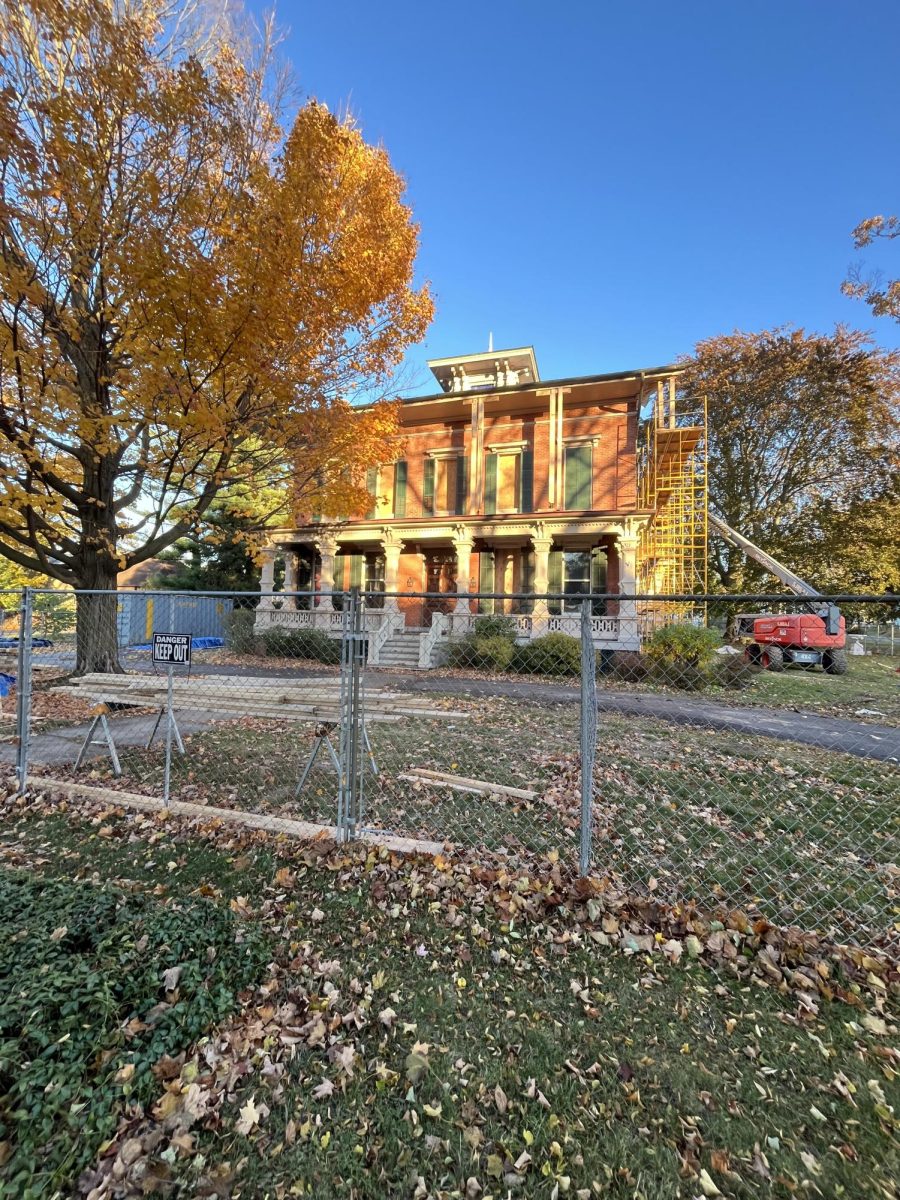
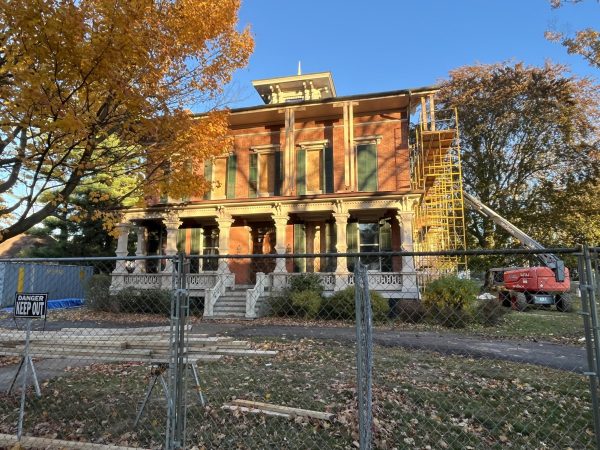
It’s been nearly nine months since the fire, and work on restoring the Morgan-Manning House continues steadily. Crews are currently focused on weatherproofing the roof to protect the structure from further damage as the restoration moves forward. Inside, much of the building still bears the scars of the blaze, and progress has been careful and deliberate.
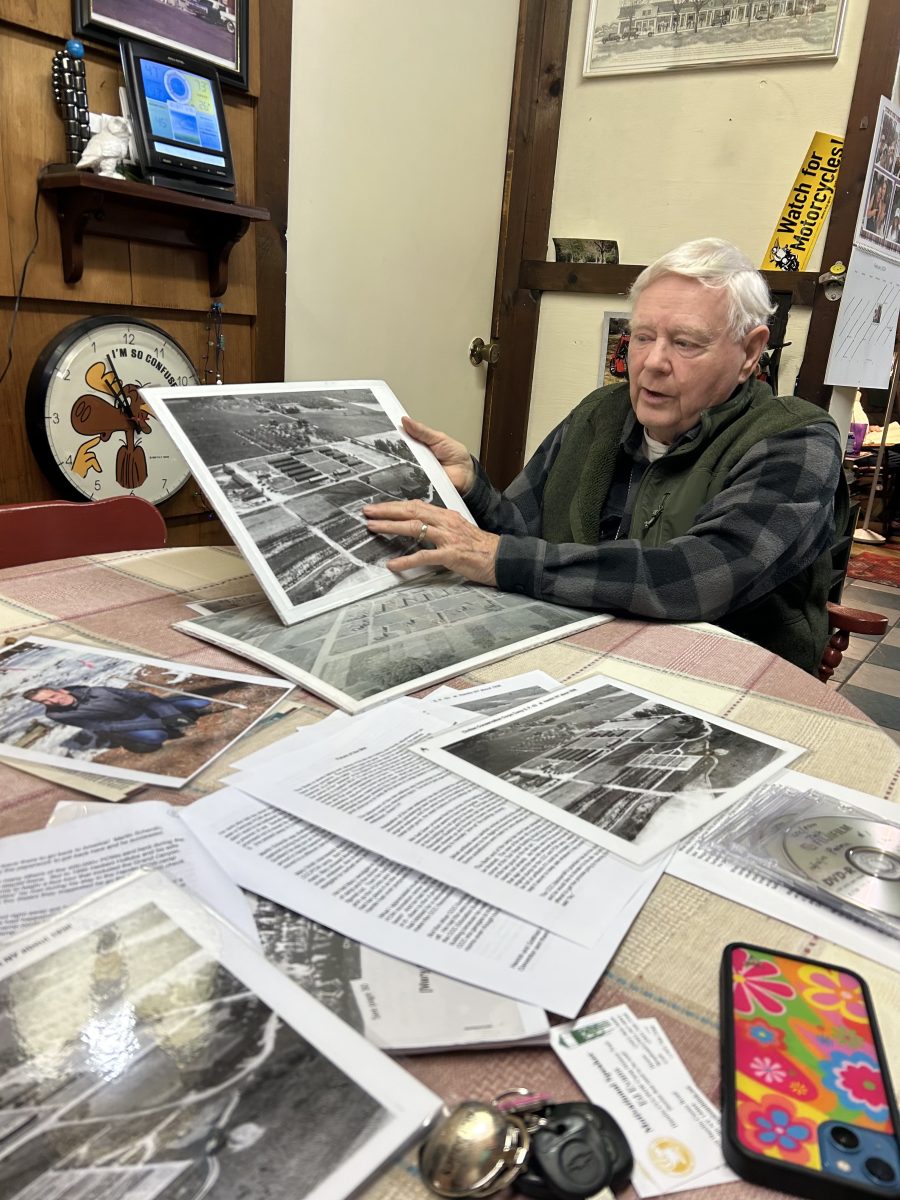
According to project manager and former board president Paul Kimball, “It will be absolutely a minimum of one year, and it may be in the range of two to three years just because of the structural damage inside.”
Despite the challenges, the Brockport community has rallied around the historic home. Local businesses and organizations have stepped up to support the ongoing work — Grinds Cafe hosted a golf tournament that raised more than $3,000, while Barber’s Grill & Tap Room and the Brockport Lions Club joined forces to hold another successful fundraiser. Even the youngest members of the community contributed: a local Daisy Girl Scout troop collected $2,000 through a bottle drive to aid in the rebuilding efforts.
Every dollar raised brings the Morgan-Manning House one step closer to restoration, ensuring that the 19th-century landmark will continue to stand as a testament to Brockport’s resilience and community pride. With each step forward, both the Morgan-Manning house and the community can begin to leave the devastating events of January 14 in the past.
The evening of January 14:
As the board of trustees began to gather at the house for their meeting, they noticed something was off. Smoke was coming from behind the house.
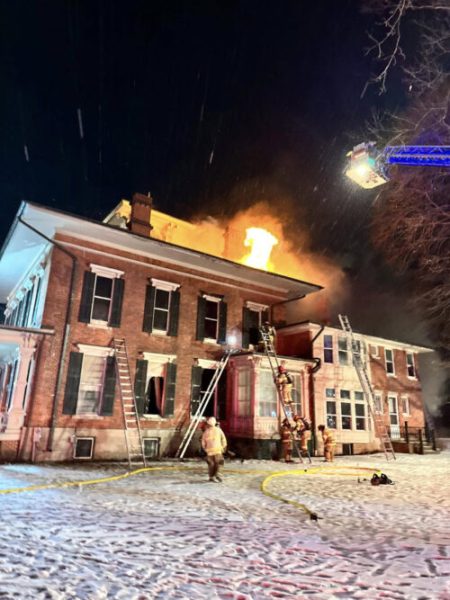
“When I arrived at the house, I found out the house was on fire” says former vice-president/current president of the board, Scott Hunsinger. “At that point we didn’t know the extent of it. Paul Kimball, who was the president of the organization [at the time] went into the house and deemed that the fire was not something that could be put out [quickly]. The fire department had been called.”
The Brockport fire department arrived within five minutes of receiving the call.
“We spent the next hour in the parking lot in the back seeing the black smoke..come out of the house thinking that hopefully this is going to be a quick fire, not knowing what was going on inside,” said Hunsinger. “The longer time went by; we realized that the fire was more out of control than we thought.”
Throughout the course of the fire, a total of eleven surrounding fire companies were called to assist in the efforts. Fire crews descended into the basement first, where they found a small blaze and quickly put it out. But as they worked below, a heavy fire broke out on the first floor. Crews fought the growing flames, battling the heat and chaos as they attempted to bring the blaze under control.
Once the flames on the main floor were contained, teams pushed upward to the second floor, searching for signs of fire that might have spread. Their progress slowed when they discovered flames hidden deep within the walls—fire they couldn’t easily reach. Moments later, part of the second floor gave way, partially collapsing onto the first floor below.
With the structure now unstable, all crews were ordered out, shifting the fight to a defensive attack. Utilizing the ground and aerial ladders, they were able to attack part of the fire from the front porch roof through the windows. Despite the fire fighters’ best efforts, the fire spread to the attic, and broke through the second floor as smoke poured into the night.
The idea that the house could burn down started to settle.
“There were discussions that if the Belvedere- the top lookout of the house if that had become anymore engulfed, that there was a chance that we could lose the house itself” said Hunsinger.
Thankfully, all was not lost.
“I went home, luckily to wake up the next morning and find out that the house hadn’t been lost and on Tuesday we started the process of discussing what we were going to do” said Hunsinger.
After Monroe County fire investigators evaluated the scene, they determined the fire was electrical in nature, caused by a malfunctioning control valve in the home’s basement. The board then worked with the National Fire Adjusters- a company that works with property owners in insurance claims following disasters like fires, floods or severe storms. They put together an estimate of $4.9 million. As of June, the board has spent $600,000, with $225,000 going to asbestos removal.
“There was some asbestos that actually was part of the house due to the fire in 1964. It was in the material that was used to repair the house, the cement and the mortar that was used for drywall and the drywall mud basically is what it is, and that asbestos in their catching fire in the water and things caused the need for an asbestos abatement” said Hunsinger.
Brockport’s original party house:
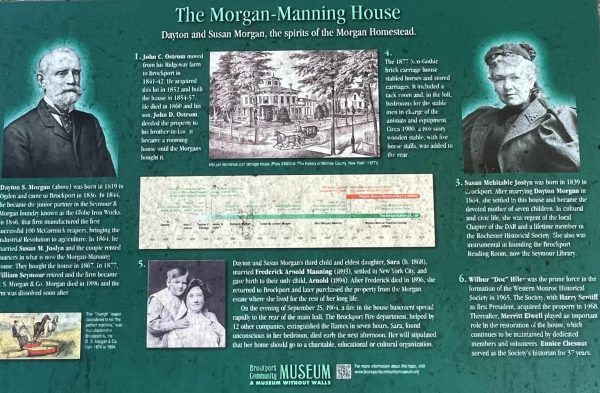
The Morgan-Manning House was built in 1854 for John C. Ostrom, a local farmer who had risen to success as a businessman. Ostrom took great pride in the project, personally overseeing the construction of the elegant home designed in the Italian Villa style—an architectural trend that reflected prosperity and refinement.
Tragically, both Ostrom and his wife died not long after the home’s completion, leaving their stately residence to their children. For years, the house remained in the family, passing between Ostrom’s kids.
By 1860, Ostrom’s daughter, Julia Eldridge, who was living in New York City, began renting out a few rooms at the side and rear of the house to Dr. S. M. Olden and his daughter, Mary. The remaining rooms stayed closed off to the tenants.
When Mary decided to throw a dance party, she wrote to Mrs. Eldridge asking for permission to use the rest of the house. Julia’s reply came swiftly by telegram: her request was denied. But Mary had already made her plans—and went ahead with the party anyway. When word reached Mrs. Eldridge, she was less than pleased and promptly asked the pair to move out.
Not long after, the home was sold to James O. Guild of Titusville, Pennsylvania, and in 1867, it found a new owner in Dayton S. Morgan, a businessman and founder of the Globe Iron Works. Morgan’s enterprise was credited with producing the first one hundred McCormick reapers, machines that revolutionized farming across the country.
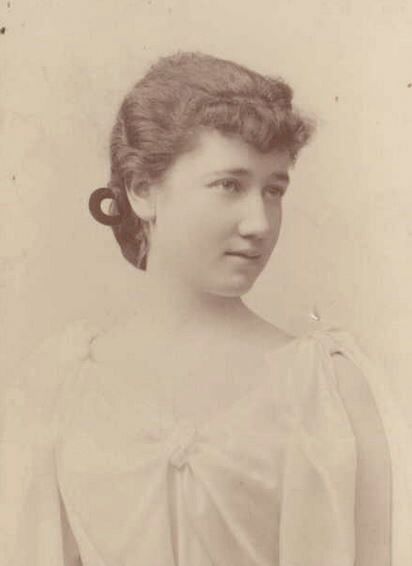
Morgan and his wife Joclyn raised their seven children in the home, keeping it in the family for over one hundred years. By 1964, Morgan’s daughter and last remaining family member, Sarah Morgan-Manning was living alone in the family home. She was 96 years old and believed to be Brockport’s oldest resident at the time.
September 26, 1964
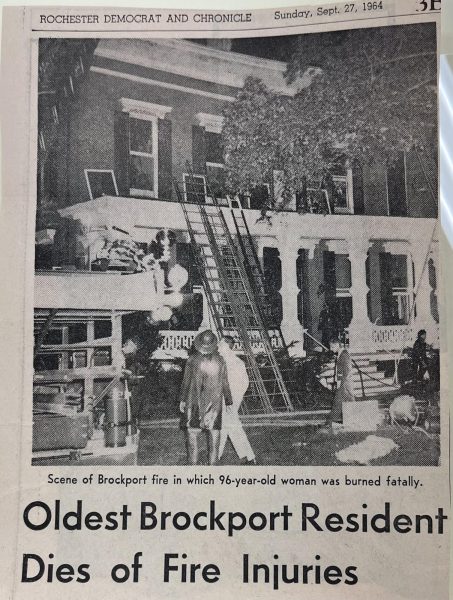
The first fire at the Morgan-Manning House broke out on September 26, 1964, claiming the life of Ms. Morgan-Manning. The blaze began shortly after midnight, sweeping through the historic family home on South Main Street. Firefighters from eleven departments battled the flames for nearly eight hours, rescuing valuable possessions and the horses from the stables behind the property. Ms. Morgan-Manning was carried from her second-floor bathroom and taken to Lakeside Memorial Hospital, where she passed away later that afternoon.
Though the fire marked the end of an era, it also set the stage for the preservation of one of Brockport’s most significant landmarks. Having long recognized the cultural and historical importance of her home, Ms. Morgan-Manning had written into her will that the property be entrusted to a “religious, educational, or charitable” organization. In 1965, the trustees transferred ownership to the Society for the Preservation of Landmarks in Western New York, which later leased the estate to the newly formed Western Monroe Historical Society. Through their commitment, and with the help of volunteers, the house was repaired and restored.
A Community Gem
For those who grew up in the community, their appreciation for the elegant, Victorian era homestead started at a young age.
“For those who grew up in Brockport, it is this gorgeous historical place you get to visit in 4th grade. You get to learn about the history of the Morgan family and how they lived so many years ago,” said the Morgan-Manning house curator, Dr. Rozenn Bailleul-LeSuer.
The home has also become a place of celebration for the residents of Brockport.
“[in the 4th grade] You would come back at Christmas to learn about how people celebrated the holidays in Victorian times, while enjoying some carols and eating a cookie. This is a really nice way to get acquainted with history and the importance of having such historical landmarks in one’s community. Morgan-Manning House is also central for the celebration of special holidays like the 4th of July,” said Dr. Bailleul-LeSuer.
The Morgan-Manning home has also become a special place for many students who have attended SUNY Brockport.
“I have been able to host more than 50 interns from the Museum Studies Program. It is a unique way for students to get invested in the community and to learn what it takes to be a museum professional,” said Dr. Bailleul-LeSuer.
For many, their love for the Morgan-Manning house does not end once they graduate.
“It was heartwarming for me to get so many messages of support from former students when they heard of the house burning. They cared so much about the place that they were hurt to see it in flames and offered their help. Quite an emotional time for many of us. Now these students continue to reach out to get regular updates. Their experience did not end with the semester. They continue to feel a deep connection to the place,” said Dr. Bailleul-LeSuer.
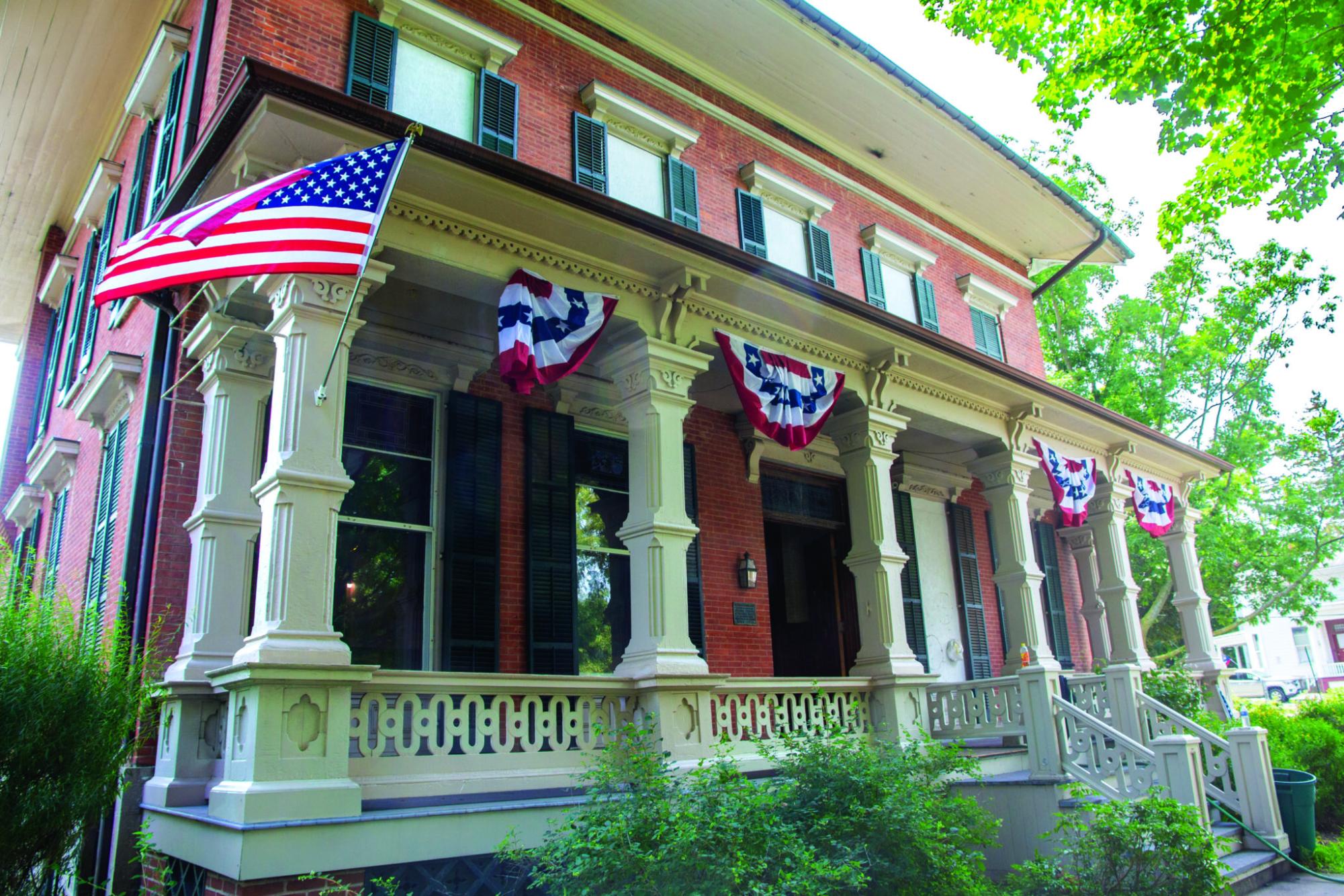
For the Brockport community, the Morgan-Manning house is more than a museum; it’s a symbol of resilience and a deep connection to their history, proving that no matter what happens to the Morgan-Manning house, it’s legacy will continue to thrive in the community that treasures it.